
Career
Disha
Nepal
Job & Education Database


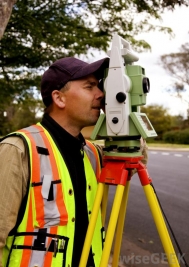
Surveyors determine the boundaries, area, or elevations of (land or structures on the earth's surface) by the means of measuring angles and distances, using the techniques of geometry and trigonometry ... learn more
Self Employment Ratio
Diploma in Survey Engineering is a 3 years course by CTEVT for individuals who have passed SEE. In Diploma in Survey/Geomatics Engineering course few scholarships are available based on the intake per ... learn more
Surveyors determine the boundaries, area, or elevations of (land or structures on the earth's surface) by the means of measuring angles and distances, using the techniques of geometry and trigonometry. (NOT to be confused with someone who conducts a statistical survey)
Entry Salary / Income
Rs. (not set) - (not set)
| Security and Army | Professionals | |
| Skilled Urban | Skilled Rural | |
| Supporting Operations | ||
The table illustrates the segregation of occupations according to the level of education & experience. The segregation is such that the 'Professionals' have the highest amount of education and/or experience then are the 2 skilled labour (Urban & Rural) and Supporting Occupations with assemblers, operators etc. Security and Army have a wider range of both education and experience and are governmental jobs.
The boxes highlighted are the ones associated with Surveyor . According to ISCO, jobs can have various levels of education and/or experience which thus puts them in different boxes as visualized in the table.
| Duration | Fee (Rs) | Access without SEE | |||
|---|---|---|---|---|---|
|
BSW
|
Skilled Urban |
3 Year(s) |
177,000 - 352,000 |
No
|
learn more |
|
The Bachelor of Social Work (BSW) degree program prepares students for entry-level practice in social work. Social Work is one of the helping professions committed to improving people’s lives. Social workers may assist people in dealing with their relationships, in solving personal and family problems, or in improving the environment in their community. Social workers focus on social problems and the individual difficulties that arise from these social problems. These problems may include domestic violence, child abuse, unemployment, poor or no housing, disability, and serious illness. Most social workers work in organizations or agencies whose missions focus on helping people deal with one of more of these social problems in their lives. Go to education page
|
|||||
|
Basic surveying trai
|
Skilled Urban |
2 Year(s) + 6 Months | 33,000 |
Yes
|
learn more |
|
The training covers the basic things that need to be known while conducting a survey. It gives the knowledge on different approaches to conduct a survey, the questionnaire development, filling up procedure and also the knowledge on variables and scales. Go to education page
|
|||||
| Duration | Fee (Rs) | Access without SEE | |||
|---|---|---|---|---|---|
|
Boss
|
Skilled Urban |
4 Year(s) | 530,000 |
No
|
learn more |
|
Bachelor of Social Sciences (BoSS) is a new unique program designed to address the holistic study of social sciences. It focuses on the dynamics of the society and the social change incorporating the subjects like Sociology, Anthropology, Psychology, Philosophy, Political Science and Governance. This program reflects the contemporary dynamics of Nepalese and global society. Go to education page
|
|||||
Work activities, rather mental: You prefer your work to be mental in nature, with only some physical activity required. You should consider looking for jobs where you are mostly required to sit in one place and come up with ideas or handle information. Some examples would include desk jobs, handicrafts requiring detailed work without emphasizing heavy work and jobs involving scientific research.
Style of Working, only applying: You prefer to have a lot of structure in your work, and you like to follow established methods of doing things. You should consider looking for jobs that are fairly routine and repetitive. Some examples would include running a business, teaching, and jobs that require physical labour.
Information Processing, detailed & global: You are equally capable of focusing on a specific aspect or looking at the entire operation, without any particular preference for either. You should consider looking for jobs that will require you to have some specialized knowledge and also be able to look at the bigger picture at the same time. Some examples would include working in agriculture and economic management.
Flexibility, medium: You are equally comfortable with having a fixed or a constantly changing work routine, with no particular preference for either.You should consider looking for jobs that allow for some flexibility while also maintaining a fixed routine in some aspects. Some examples would include working in tourism and doing social work.
Value orientation, only idealistic: You believe that your work must have meaning behind it, without any material importance. You should consider looking for jobs that will give you some personal satisfaction while doing it. Some examples would include teaching and doing social work.
Pursuit of Success, low: Having a personal life is important to you. You don’t want your social and family relationships to suffer from dedicating time to your work. You should consider looking for jobs that will not interfere with your private life. Avoid jobs which require you to dedicate a lot of your free time to your work
Motivation to Create, very low: You prefer to implement already existing ideas rather than come up with your own ways of doing things. You should consider looking for jobs where you will be given clear and explicit instructions on what you have to do, or where there is already an established way of doing things. Avoid jobs where you have to think of your own ways of doing things
Motivation to Lead, low: You prefer to stay in the background and allow others to direct the group. You prefer to let others make up their own minds. You should consider looking for jobs where you can do what you want and not have to tell others what to do. Avoid jobs where you will be required to lead a group of people
Sense of Duty, very high: You often feel personally responsible for your work. You are careful when doing your work and you like to do your best. You should consider looking for jobs where you will be entrusted with valuable work that will encourage you to do your best. Avoid jobs where you are not given any responsibility for your work and that do not encourage you to do well
Action orientated, high: You prefer to take the initiative in your work and to be proactive. You would rather not wait for your work to come to you. You should consider looking for jobs where you need to drive your work forward. Avoid jobs where you have to wait for something to happen before you can do anything
Analysis orientated, very high: You like to spend a lot of time thinking before you make a decision. You believe that it is important to consider everything before acting. You should consider looking for jobs where you are required to think carefully before acting. Avoid jobs where you need to make decisions quickly without much time for thinking.
Ability to Socialize, high: You are comfortable meeting new people. You have no problem socializing and interacting with different kinds of people, and finding things to talk about. You should consider looking for jobs where you can work with and meet many kinds of people. Avoid jobs where you will not have much interaction with others.
Team oriented, very low: You are independent and work best on your own. It is difficult for you to work with others and to conform your way of working to theirs but on the other hand you do not feel odd if you have to work on your own. You should consider looking for jobs which have a lot of tasksthat can be fulfilled on your own and have a low degree of collaboration with colleagues or experts you need to ask for help
Ability to cope with pressure, high: You are capable of working under pressure, to the point where you almost enjoy it. You are not easily stressed by daunting tasks. You should consider looking for jobs where you have to work at a hectic pace and perform well. Avoid jobs where you do not have to exert much effort.
Self Employment Ratio
At the moment there are people working in this job in Nepal.
Shows the demand of the career (1st being the highest and the last being over-saturated).
60 = very high: This job is very high in demand. You can easily find employment or will be able to sell your service easily as a self employed person.
50 = high: This job is high in demand. With a certain talent you will find a job.
40 = medium: The demand for this job is medium. You should have chances in finding a job, but you might need to be flexible regarding your working place or in self employment, might have to compete with a few other professionals about the work.
30 = low: The demand for this job is low. Only a few vacancies are published. Academic proficiency as well as experience is required to be even considered for applying for this sort of jobs.
20 = saturated: There is no more demand for this profession in the labour market. Only if existing staff is released, new people are hired.
10 = over-supplied: There are many graduates already waiting for a job in this profession. You might have to consider a long waiting list or have to prove extraordinary talent to find a job in this profession.
The below jobs are similar to Surveyor because of factors such as similar education, similar tasks and similar required abilities.