
Career
Disha
Nepal
Job & Education Database


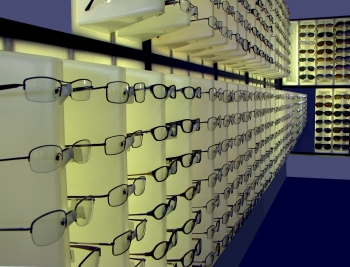
Optician is a technical practitioner who designs, fits, prepare prescription eyeglass lenses, help customers choose eyeglass frames and tailor the frames to customers’ unique facial measurements. Wh ... learn more
Self Employment Ratio
Other than studying Bachelor of Optometry, a 4 year course prospective opticians can take the apprenticeship path. They are recommended to undergo a two- to four-year period of on-the-job training und ... learn more


Optician is a technical practitioner who designs, fits, prepare prescription eyeglass lenses, help customers choose eyeglass frames and tailor the frames to customers’ unique facial measurements. When customers need contact lenses instead, opticians adjust the fit of the lenses to the eyes and dispenses corrective lenses for the correction of a person's vision.
Entry Salary / Income
Rs. (not set) - (not set)
| Security and Army | Professionals | |
| Skilled Urban | Skilled Rural | |
| Supporting Operations | ||
The table illustrates the segregation of occupations according to the level of education & experience. The segregation is such that the 'Professionals' have the highest amount of education and/or experience then are the 2 skilled labour (Urban & Rural) and Supporting Occupations with assemblers, operators etc. Security and Army have a wider range of both education and experience and are governmental jobs.
The boxes highlighted are the ones associated with Optician . According to ISCO, jobs can have various levels of education and/or experience which thus puts them in different boxes as visualized in the table.
| Duration | Fee (Rs) | Access without SEE | |||
|---|---|---|---|---|---|
|
B Optom
|
Professional |
4 Year(s) | 0 |
No
|
learn more |
|
Optometrists play a crucial role in primary health care, examining the population’s eyes, diagnosing vision problems and providing treatment. The Bachelor of Optometry (BOptom) covers both clinical optometry and vision science and involves the study of the basic physical and life sciences as they relate to the visual system. Go to education page
|
|||||
|
Ophthalmic Assistant
|
Professional |
0 |
Yes
|
learn more | |
| Duration | Fee (Rs) | Access without SEE | |||
|---|---|---|---|---|---|
|
Dip.Ophthalmic
|
Professional |
3 Year(s) |
120,000 - 360,000 |
No
|
learn more |
|
Diploma in Ophthalmic Science is a three year program under CTEVT. Go to education page
|
|||||
Sociability, outgoing: You prefer to interact with many different people, but you are capable of working by yourself if necessary. You should consider looking for jobs which involve interacting with customers and where you are in interaction and which allows you to be in the center of attention. Some options would include jobs that involve maintaining relationships with customers and partners or stakeholders, and organizing events.
Style of Working, only applying: You prefer to have a lot of structure in your work, and you like to follow established methods of doing things. You should consider looking for jobs that are fairly routine and repetitive. Some examples would include running a business, teaching, and jobs that require physical labour.
Information Processing, rather detailed: You prefer to focus on a specific aspect, but with some awareness of how it fits within the larger operation. You should consider jobs that require you to focus and pay great attention to the details of what you are doing. Some examples would include jobs that involve handling accounts, working with data, or maintenance works
Flexibility, very low: You prefer to have a fixed work routine with little or no change every day. You should consider looking for jobs where you are required to go to an office at a specific time each working day. Some examples would include desk jobs and running a shop.
Value orientation, rather idealisitic: You believe that your work must have meaning behind it, with only some importance attached to the material gain of your work. You should consider looking for jobs that will give you some personal satisfaction while doing it. Some examples would include teaching and doing social work.
Pursuit of Success, very low: Having a personal life is important to you. You don’t want your social and family relationships to suffer from dedicating time to your work. You should consider looking for jobs that will not interfere with your private life. Avoid jobs which require you to dedicate a lot of your free time to your work
Motivation to Create, very low: You prefer to implement already existing ideas rather than come up with your own ways of doing things. You should consider looking for jobs where you will be given clear and explicit instructions on what you have to do, or where there is already an established way of doing things. Avoid jobs where you have to think of your own ways of doing things
Motivation to Lead, low: You prefer to stay in the background and allow others to direct the group. You prefer to let others make up their own minds. You should consider looking for jobs where you can do what you want and not have to tell others what to do. Avoid jobs where you will be required to lead a group of people
Analysis orientated, low: You do not like to spend too much time thinking when making decisions. You usually make decisions and act quickly. You should consider looking for jobs where you can act immediately without spending a lot of time thinking. Avoid jobs where you are required to think about a lot of things before you can act.
Team oriented, very low: You are independent and work best on your own. It is difficult for you to work with others and to conform your way of working to theirs but on the other hand you do not feel odd if you have to work on your own. You should consider looking for jobs which have a lot of tasksthat can be fulfilled on your own and have a low degree of collaboration with colleagues or experts you need to ask for help
Strength of enforcement, high: You are usually direct and you are capable of confronting others if needed. You have no problem saying what is on your mind. You should consider looking for jobs where you can evaluate and monitor others’ performance. Avoid jobs where you are not encouraged to say what is on your mind.
Self Employment Ratio

At the moment there are people working in this job in Nepal.
Shows the demand of the career (1st being the highest and the last being over-saturated).
60 = very high: This job is very high in demand. You can easily find employment or will be able to sell your service easily as a self employed person.
50 = high: This job is high in demand. With a certain talent you will find a job.
40 = medium: The demand for this job is medium. You should have chances in finding a job, but you might need to be flexible regarding your working place or in self employment, might have to compete with a few other professionals about the work.
30 = low: The demand for this job is low. Only a few vacancies are published. Academic proficiency as well as experience is required to be even considered for applying for this sort of jobs.
20 = saturated: There is no more demand for this profession in the labour market. Only if existing staff is released, new people are hired.
10 = over-supplied: There are many graduates already waiting for a job in this profession. You might have to consider a long waiting list or have to prove extraordinary talent to find a job in this profession.
The below jobs are similar to Optician because of factors such as similar education, similar tasks and similar required abilities.