
Career
Disha
Nepal
Job & Education Database


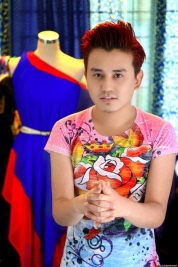
A fashion designer can work in a number of settings. S/He can work as costume designer, fashion consultant, personal stylist, production pattern maker, fashion coordinator, apparel production manager, ... learn more
Self Employment Ratio
You can do Bachelors in Fashion designing which is a three years course. You can also do a short-term training provided by CTEVT 'Fashion Designer' which is for 650 hours is available for individuals ... learn more

A fashion designer can work in a number of settings. S/He can work as costume designer, fashion consultant, personal stylist, production pattern maker, fashion coordinator, apparel production manager, fabric buyer, fabric quality control manager, illustrator, cutting assistant and outside sales representative in this industry.
Entry Salary / Income
Rs. (not set) - (not set)
As there is more competition in this profession which falls under the field of art and creativity, it is necessary to have good knowledge about the current fashion trends. Most of them have to work together so they have to have the ability to negotiate. The fashion designer has to be able to give the design as per the customer's desire Designers make ready-made dresses, garments, cultural dresses, according to the customer's design. They design different clothes on special occasions such as; weddings, street events, festivals, fairs. They have to be able to draw while working. They can work under various music videos, filmmakers as well as run personal businesses. Designers can also become boutique trainers.
| Security and Army | Professionals | |
| Skilled Urban | Skilled Rural | |
| Supporting Operations | ||
The table illustrates the segregation of occupations according to the level of education & experience. The segregation is such that the 'Professionals' have the highest amount of education and/or experience then are the 2 skilled labour (Urban & Rural) and Supporting Occupations with assemblers, operators etc. Security and Army have a wider range of both education and experience and are governmental jobs.
The boxes highlighted are the ones associated with Fashion Designer . According to ISCO, jobs can have various levels of education and/or experience which thus puts them in different boxes as visualized in the table.
| Duration | Fee (Rs) | Access without SEE | |||
|---|---|---|---|---|---|
|
BFD
|
Skilled Urban |
3 Year(s) | 0 |
No
|
learn more |
|
The 3 year (6 Semester) course is a highly dynamic and rewarding degree and is a wonderful combination of science, art and technology.
It consists of elements of science as textile science and textile designing are considered major parts of fashion designing. Similarly, it consists of elements of art as having an artistic insight is a major requirement for becoming a good fashion designer. Go to education page
|
|||||
|
Fashion Designer
|
Skilled Urban |
390 Hours | 0 |
Yes
|
learn more |
|
fashion designing
|
Skilled Urban |
650 Hours | 0 |
Yes
|
learn more |
|
Fashion design is the art of application of design and aesthetics or natural beauty to clothing and accessories. Fashion design is influenced by cultural and social attitudes, and has varied over time and place. Fashion designers work in a number of ways in designing clothing and accessories such as bracelets and necklace. Because of the time required to bring a garment onto the market, designers must at times anticipate changes to consumer tastes. Go to education page
|
|||||
Style of Working, rather playful: You love being creative and doing new things, even though you don’t mind to also follow a given solutions from time to time. You should consider looking for jobs where you most of the time you can create new things. Such jobs can be found among others in Media, handicrafts and design.
Information Processing, only detailed: You prefer to focus on a specific aspect of your work and to go deeper into the details. You should consider jobs that require you to focus and pay great attention to the details of what you are doing, and avoid jobs which require you to look at the bigger picture. Some examples would include jobs like bookkeeping, data management, software coding, fine arts, handicrafts or translation
Flexibility, very low: You prefer to have a fixed work routine with little or no change every day. You should consider looking for jobs where you are required to go to an office at a specific time each working day. Some examples would include desk jobs and running a shop.
Value orientation, only idealistic: You believe that your work must have meaning behind it, without any material importance. You should consider looking for jobs that will give you some personal satisfaction while doing it. Some examples would include teaching and doing social work.
Pursuit of Success, high: For you it is important to succeed in your work. You have no problem with dedicating your free time to your work, and you welcome challenges and obstacles. You should consider looking for jobs that will motivate you to do well and succeed. Avoid jobs that will not challenge you to perform better.
Motivation to Create, very high: You prefer to come up with your own ways of doing things. You should consider looking for jobs where you have some freedom to make your own decisions. Avoid jobs where you have to follow directions.
Motivation to Lead, quite high: You prefer to lead and direct others in a group. You like to tell them what you want to do and convince them to follow you. You should consider looking for jobs where you can lead a group of people and direct your group’s efforts. Avoid jobs where you will not be able to share your ideas on what you want others to do.
Analysis orientated, high: You like to spend a lot of time thinking before you make a decision. You believe that it is important to consider everything before acting. You should consider looking for jobs where you are required to think carefully before acting. Avoid jobs where you need to make decisions quickly without much time for thinking.
Team oriented, high: It is easy for you to cooperate and collaborate with others. You enjoy working with a team on tasks and projects. You should consider looking for jobs where you will be required to work with a team to perform tasks. Avoid jobs that will require you to work on your own.
Strength of enforcement, high: You are usually direct and you are capable of confronting others if needed. You have no problem saying what is on your mind. You should consider looking for jobs where you can evaluate and monitor others’ performance. Avoid jobs where you are not encouraged to say what is on your mind.
Self Employment Ratio
At the moment there are people working in this job in Nepal.
Shows the demand of the career (1st being the highest and the last being over-saturated).
60 = very high: This job is very high in demand. You can easily find employment or will be able to sell your service easily as a self employed person.
50 = high: This job is high in demand. With a certain talent you will find a job.
40 = medium: The demand for this job is medium. You should have chances in finding a job, but you might need to be flexible regarding your working place or in self employment, might have to compete with a few other professionals about the work.
30 = low: The demand for this job is low. Only a few vacancies are published. Academic proficiency as well as experience is required to be even considered for applying for this sort of jobs.
20 = saturated: There is no more demand for this profession in the labour market. Only if existing staff is released, new people are hired.
10 = over-supplied: There are many graduates already waiting for a job in this profession. You might have to consider a long waiting list or have to prove extraordinary talent to find a job in this profession.
The below jobs are similar to Fashion Designer because of factors such as similar education, similar tasks and similar required abilities.