
Career
Disha
Nepal
Job & Education Database


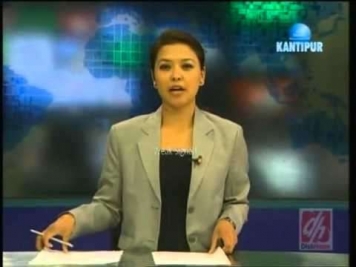
A person who investigates and reports or edits news stories. Reporter or Correspondent usually a journalist or commentator for magazines, or more speaking an agent who contributes reports to a newspa ... learn more
Self Employment Ratio
B.A. in Journalism and Mass Comunication is the certification for Journalism. There are no specific course for Reporter or Correspondent, however a person with a high general interest and a good writi ... learn more
A person who investigates and reports or edits news stories. Reporter or Correspondent usually a journalist or commentator for magazines, or more speaking an agent who contributes reports to a newspaper or radio or television news or another type of company, from a remote often distant location.
Entry Salary / Income
Rs. (not set) - (not set)
| Security and Army | Professionals | |
| Skilled Urban | Skilled Rural | |
| Supporting Operations | ||
The table illustrates the segregation of occupations according to the level of education & experience. The segregation is such that the 'Professionals' have the highest amount of education and/or experience then are the 2 skilled labour (Urban & Rural) and Supporting Occupations with assemblers, operators etc. Security and Army have a wider range of both education and experience and are governmental jobs.
The boxes highlighted are the ones associated with Reporter or Correspondent. According to ISCO, jobs can have various levels of education and/or experience which thus puts them in different boxes as visualized in the table.
| Duration | Fee (Rs) | Access without SEE | |||
|---|---|---|---|---|---|
|
Dip.Jornalism
|
Professional |
3 Year(s) | 0 |
No
|
learn more |
|
Journalism and Mass Communications have attracted considerable attention to and attendance of
working media practitioners as well as potential communicators covering various branches of this
field. Given that media in Nepal give high priority to skill-based knowledge, an appropriate course
imparting extensive skills, backed by theoretical knowledge, will create considerable interest in
potential students pursuing such course in the cross-section of Nepal's media industry, which has
grown dramatically since the 1990s. Skill is what counts the most in media houses, and a course
catering to such needs will go a long way in generating employment. Go to education page
|
|||||
|
B.A. Journalism and
|
Professional |
3 Year(s) | 200,000 |
No
|
learn more |
|
BA in Journalism and Mass Communication enable students to appreciate and discuss the importance of studying journalism and mass communication in relation to mass media. They will be able to apply mass communication principles and have insight into communication issues through application in the practical fields. Students gain insight into the history, laws and ethical issues of media functioning, including management and organization understanding of news operation and editing and identify major trends in national and global media, raise issues with information flow system and define systems that govern the role and operation of journalism activity. Go to education page
|
|||||
Sociability, very outgoing: You prefer to interact with many different people, but you are capable of working by yourself if necessary. You should consider looking for jobs which involve interacting with customers and where you are in interaction and which allows you to be in the center of attention. Some options would include jobs that involve maintaining relationships with customers and partners or stakeholders, and organizing events.
General Interest, very high: You are interested in many thing and spend a lot of time on updating yourself on the newest developments in different sectors. You should consider looking for jobs where it is beneficial for you to learn about many different topics.Such jobs can be found among others in art, media, and education
Information Processing, detailed & global: You are equally capable of focusing on a specific aspect or looking at the entire operation, without any particular preference for either. You should consider looking for jobs that will require you to have some specialized knowledge and also be able to look at the bigger picture at the same time. Some examples would include working in agriculture and economic management.
Flexibility, very high: You prefer to have a constantly changing work routine with only a few things or nothing being the same every day. You should consider looking for jobs that give you considerable freedom in where and what time you work. Some examples would include online jobs, freelancing, and writing.
Value orientation, only idealistic: You believe that your work must have meaning behind it, without any material importance. You should consider looking for jobs that will give you some personal satisfaction while doing it. Some examples would include teaching and doing social work.
Pursuit of Success, very high: For you it is important to succeed in your work. You have no problem with dedicating your free time to your work, and you welcome challenges and obstacles. You should consider looking for jobs that will motivate you to do well and succeed. Avoid jobs that will not challenge you to perform better
Motivation to Create, low: You prefer to implement already existing ideas rather than come up with your own ways of doing things. You should consider looking for jobs where you will be given clear and explicit instructions on what you have to do, or where there is already an established way of doing things. Avoid jobs where you have to think of your own ways of doing things.
Motivation to Lead, very high: You prefer to lead and direct others in a group. You like to tell them what you want to do and convince them to follow you. You should consider looking for jobs where you can lead a group of people and direct your group’s efforts. Avoid jobs where you will not be able to share your ideas on what you want others to do.
Sense of Duty, very high: You often feel personally responsible for your work. You are careful when doing your work and you like to do your best. You should consider looking for jobs where you will be entrusted with valuable work that will encourage you to do your best. Avoid jobs where you are not given any responsibility for your work and that do not encourage you to do well
Action orientated, very high: You prefer to take the initiative in your work and to be proactive. You would rather not wait for your work to come to you. You should consider looking for jobs where you need to drive your work forward. Avoid jobs where you have to wait for something to happen before you can do anything.
Analysis orientated, high: You like to spend a lot of time thinking before you make a decision. You believe that it is important to consider everything before acting. You should consider looking for jobs where you are required to think carefully before acting. Avoid jobs where you need to make decisions quickly without much time for thinking.
Ability to Socialize, very high: You are comfortable meeting new people. You have no problem socializing and interacting with different kinds of people, and finding things to talk about. You should consider looking for jobs where you can work with and meet many kinds of people. Avoid jobs where you will not have much interaction with others.
Team oriented, very high: It is easy for you to cooperate and collaborate with others. You enjoy working with a team on tasks and projects. You should consider looking for jobs where you will be required to work with a team to perform tasks. Avoid jobs that will require you to work on your own.
Strength of enforcement, very high: You are usually direct and you are capable of confronting others if needed. You have no problem saying what is on your mind. You should consider looking for jobs where you can evaluate and monitor others’ performance. Avoid jobs where you are not encouraged to say what is on your mind.
Ability to cope with pressure, very high: You are capable of working under pressure, to the point where you almost enjoy it. You are not easily stressed by daunting tasks. You should consider looking for jobs where you have to work at a hectic pace and perform well. Avoid jobs where you do not have to exert much effort.
Self-confidence, very high: You have a high amount of self-confidence. It is easy for you to present yourself in front of others. You should consider looking for jobs where you will have to make presentations in front of groups of people. Avoid jobs where you will not be encouraged to talk to other people.
Self Employment Ratio
At the moment there are people working in this job in Nepal.
Shows the demand of the career (1st being the highest and the last being over-saturated).
60 = very high: This job is very high in demand. You can easily find employment or will be able to sell your service easily as a self employed person.
50 = high: This job is high in demand. With a certain talent you will find a job.
40 = medium: The demand for this job is medium. You should have chances in finding a job, but you might need to be flexible regarding your working place or in self employment, might have to compete with a few other professionals about the work.
30 = low: The demand for this job is low. Only a few vacancies are published. Academic proficiency as well as experience is required to be even considered for applying for this sort of jobs.
20 = saturated: There is no more demand for this profession in the labour market. Only if existing staff is released, new people are hired.
10 = over-supplied: There are many graduates already waiting for a job in this profession. You might have to consider a long waiting list or have to prove extraordinary talent to find a job in this profession.
The below jobs are similar to Reporter or Correspondent because of factors such as similar education, similar tasks and similar required abilities.